
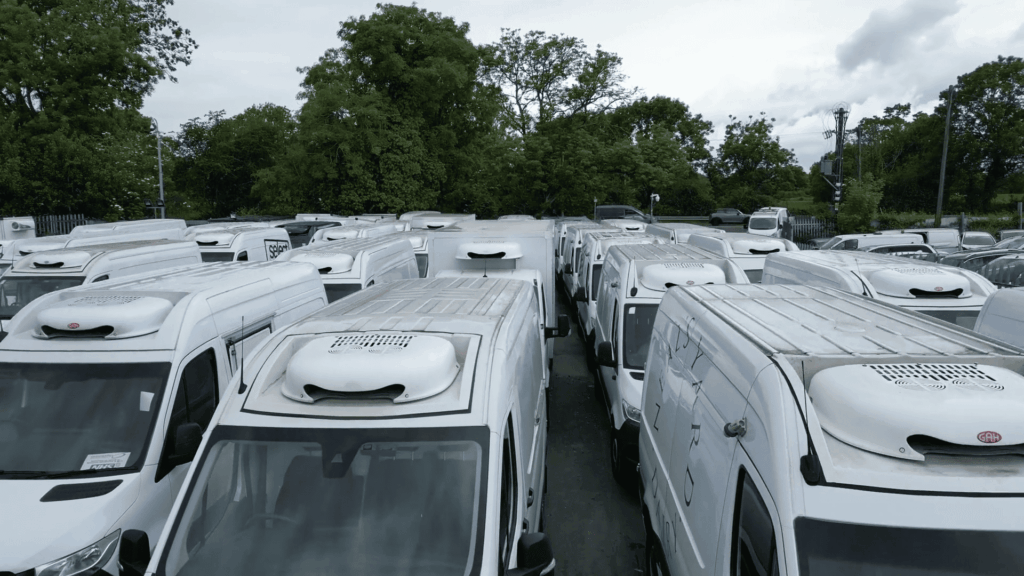
In temperature-sensitive industries, refrigerated vans are often treated as utilities. It is seen as a necessary asset that moves product from A to B while maintaining a specified temperature. From the inside of the industry, that view is far too narrow.
Cold chain logistics does far more than preserve product condition. It protects brand reputation, underpins customer trust, reduces recall exposure, and influences whether clients renew contracts or quietly look elsewhere. When it works well, it is invisible. When it fails, it is visible in the worst possible way.
Speaking as someone who works day to day with refrigerated fleets across food production, retail, frozen distribution, and diagnostics, I can say this with confidence: the difference between a respected brand and a damaged one is often decided in the back of a vehicle.
Brand Promise Does Not End at Dispatch
Businesses invest heavily in product development, sourcing, packaging, marketing, and compliance systems. Yet the final stage, transport, is often viewed as a cost centre rather than a brand asset.
Customers do not separate the product from logistics. If chilled goods arrive warm, if frozen goods show signs of refreezing, or if delivery windows are missed repeatedly, the customer blames the brand. They do not blame traffic, refrigeration units, or fleet utilisation.
We see this repeatedly. Operators who treat transport as purely operational tend to experience more brand volatility. Those who view it as part of their brand promise design logistics with a different mindset. They build resilience, not just routes.
Cold chain integrity is not a technical metric. It is a customer experience.
The Reputational Cost of Temperature Drift
Most discussions about cold chain failure focus on catastrophic breakdowns. A refrigeration unit fails completely. Product spoils. A load is rejected.
In reality, the more common damage comes from subtle temperature drift.
Repeated minor excursions during multi-drop routes. Prolonged door openings on warm days. Units running close to capacity without sufficient recovery time. These do not always trigger alarms or immediate rejection. Instead, they reduce shelf life, alter texture, or affect product stability.
Retailers notice increased returns. End customers notice inconsistent quality. Complaints rise gradually rather than dramatically.
We see this fail most often when fleets are stretched without adjusting specification or route design. The equipment technically holds temperature. Operationally, it does not maintain stability under pressure.
Brand erosion from cold chain weakness is usually slow, but it is cumulative.
When Recalls Start with Logistics
Recalls are rarely caused solely by transport, but logistics often amplify the problem.
If temperature control records are incomplete, it becomes difficult to demonstrate that the product remained within specification. That uncertainty broadens recall scope. Instead of isolating risk to a single batch or timeframe, businesses are forced to cast a wider net.
From a refrigerated vehicle perspective, the issue is often not the absence of temperature control but the absence of defensible data. Manual logs are missing entries. Alarms were not investigated thoroughly. No clear evidence of load segregation.
When a recall occurs, investigators and regulators quickly review the supply chain. If documentation is inconsistent, suspicion grows.
Operators usually underestimate the extent to which robust transport records can reduce recall exposure.
Customer Trust Is Built on Consistency, Not Perfection
No logistics operation is flawless. Vehicles break down. Traffic disrupts schedules. Weather interferes.
What builds trust is not the absence of problems, but the consistency of control and response.
Customers notice patterns. They recognise whether deliveries are generally reliable or regularly problematic. They observe how issues are communicated and resolved.
In day-to-day fleet operations, we see that businesses with structured maintenance programmes, realistic capacity planning, and transparent monitoring experience fewer reputational shocks.
Those relying on stretched assets and informal processes may perform adequately in calm conditions, but struggle when demand spikes.
Trust is cumulative. So is damage.
The Invisible Customer Experience
When consumers purchase chilled or frozen goods, they assume quality has been maintained from production to shelf. They do not consider the journey.
However, that invisible journey shapes perception.
A ready meal with uneven texture, ice crystals in frozen desserts, wilted produce, or compromised dairy are not viewed as logistics issues. They are seen as product defects.
We have seen brands with strong marketing lose ground due to repeated quality inconsistency traced back to temperature instability during transport.
Cold chain logistics is not separate from product quality. It is an extension of it.
The Operational Pressures That Threaten Brand Integrity
The most common threats to cold chain reliability are not dramatic failures. They are operational compromises made under pressure.
- Routes extended without reviewing refrigeration capacity.
- Vehicles running longer hours without maintenance adjustments.
- Temporary staff unfamiliar with temperature protocols.
- Mixed-use vehicles creating variability.
Each decision is understandable in isolation. Together, they increase brand exposure.
We often see businesses scaling successfully in sales while their logistics systems remain configured for an earlier stage of growth. This misalignment is where brand risk begins.
Why Uptime Equals Reliability in the Customer’s Eyes
From a fleet perspective, uptime is usually measured operationally. Percentage of vehicles available. Maintenance intervals. Breakdown frequency.
From a customer perspective, uptime equals delivery reliability.
A missed or late chilled delivery affects shelf availability. A late-arriving frozen product can disrupt store replenishment cycles. For subscription food businesses, a missed delivery directly damages customer confidence.
We see operators delay preventative maintenance to keep vehicles on the road during peak periods. This often leads to more serious failures at the worst possible time.
Brand reliability depends heavily on disciplined fleet management.
Data As a Trust-Building Tool
Modern refrigerated fleets increasingly use telematics and temperature monitoring systems. These systems are often installed for compliance reasons.
Their true value lies in transparency and proactive management.
When operators actively review temperature data, identify patterns, and adjust routes or loading practices accordingly, consistency improves.
When data is collected but not analysed, small issues persist.
We see a clear difference between businesses that treat data as an audit requirement and those that use it as an operational tool.
Trust grows where evidence supports performance.
The Role of Culture in Protecting the Cold Chain
Equipment alone does not protect the brand promise. Culture does.
Drivers who understand why temperature stability matters behave differently. Warehouse teams who appreciate the impact of door discipline act differently. Planners who recognise the cost of route stretching make different decisions.
We often see temperature excursions linked to behaviour rather than equipment failure. Doors left open unnecessarily. Units switched off to reduce noise. Loading delays ignored.
These behaviours are rarely malicious. They are usually the result of weak communication or training.
Cold chain excellence requires organisational alignment, not just hardware.
The Long Memory of Customers
In competitive markets, customers have options. A retailer, wholesaler, or end consumer will tolerate occasional issues. They rarely tolerate repeated inconsistency.
Once a brand is associated with unreliable chilled quality, regaining confidence is difficult. Discounts, promotions, and marketing campaigns cannot compensate for perceived product weakness.
From the refrigerated vehicle side, we often see businesses invest heavily in recovery after reputational damage, when earlier investment in logistics resilience would have been cheaper and more effective.
Prevention is rarely visible. Recovery is always expensive.
Logistics Excellence as a Competitive Advantage
Cold chain strength can differentiate brands.
Retailers prefer suppliers who consistently deliver within specification. Wholesalers favour partners who minimise the risk of rejection. Subscription customers value punctuality and quality.
Operators who design fleets with headroom, maintain strict temperature discipline, and build flexibility into peak planning are more likely to retain long-term relationships.
In practice, this often means resisting the temptation to optimise for the lowest short-term cost. Stretching capacity may temporarily reduce expenses, but it increases risk.
Reputation thrives on predictability.
Building Trust Through Realistic Planning
From an operational standpoint, building trust begins with an honest assessment.
Are refrigeration units operating comfortably within specification? Is there spare capacity during peak demand? Are maintenance schedules aligned with workload? Are temperature logs reviewed regularly?
We see the most stable brands ask these questions before problems appear.
Cold chain logistics need not be complex, but it must be deliberate.
Lessons From When Things Go Wrong
Across sectors, the most damaging cold chain failures share common features. Lack of redundancy. Poor monitoring. Informal processes. Overstretched fleets.
In contrast, businesses that recover quickly from disruptions usually have structured systems in place. Replacement vehicles are available. Clear escalation protocols. Accurate records.
Cold chain failure is rarely a single event. It is often the result of accumulated small weaknesses.
Final Thoughts: Beyond The Van
Refrigerated vehicles are often seen as transport assets. In reality, they are guardians of brand integrity.
What happens between dispatch and delivery influences customer perception as directly as marketing campaigns and product design.
Cold chain logistics shapes trust not because customers see it, but because they experience its results.
From the transport side of the industry, the message is simple. Treat refrigerated logistics as part of your brand strategy, not just your operations budget. Build resilience before pressure arrives. Maintain discipline when volumes rise. Use data to guide decisions. Invest in culture as much as equipment.
Beyond the van lies the business’s reputation.
The Benefits of Working with Northgate Temperature Controlled
In temperature-controlled logistics, the vehicle is only part of the equation. What matters just as much is the support behind it. Working with a specialist refrigerated provider such as Northgate Temperature Controlled means you are not simply sourcing vans; you are gaining access to experience built around real-world cold chain pressures.
Northgate Temperature Controlled focuses exclusively on refrigerated vehicles. That matters. It means the conversations are practical from the outset. Specification is discussed in terms of actual route demands, duty cycles, door-opening frequency and seasonal load, not just theoretical temperature range. Many operators underestimate how quickly a unit can struggle when routes extend or volumes rise. Having a partner who sees those patterns across multiple sectors helps prevent costly missteps.
Flexibility is another advantage. Demand rarely follows a smooth line. Seasonal peaks, promotions, new contracts or unexpected surges can stretch fleets quickly. Northgate Temperature Controlled offers short- and long-term hire options that enable operators to add capacity without committing capital prematurely. That flexibility reduces risk and protects margins, particularly in fast-moving sectors such as food distribution, frozen goods, diagnostics and retail.
Uptime support is equally important. Refrigerated vehicles work hard. Early starts, long hours and high ambient temperatures place consistent strain on equipment. Access to well-maintained vehicles and responsive support reduces the likelihood of service disruption. When something does go wrong, rapid resolution is critical. Product does not wait, and neither do customers.
There is also the benefit of perspective. Because Northgate Temperature Controlled works across supermarkets, wholesalers, meal prep brands, frozen dessert operators and laboratory networks, the team sees recurring operational challenges first-hand. That insight feeds into better fleet planning, more realistic capacity discussions and smarter contingency planning.
Ultimately, working with a specialist partner strengthens the cold chain beyond the van itself. It supports compliance confidence, protects brand reputation and provides practical resilience when demand increases or conditions become more demanding.
If your operation is growing, facing seasonal pressure or reviewing its current fleet strategy, now is the time to assess whether your refrigerated transport setup is genuinely fit for purpose.
